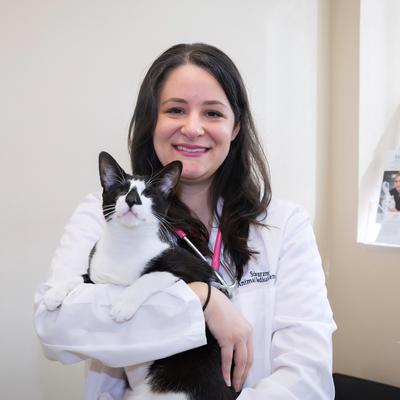

Case-Based Pathophysiological Rule Outs - When the Cat or Dog Should Visit with the Primary Care Veterinarian vs the Veterinary Behaviorist
This thought-provoking lecture serves to provide a framework for non-behavioral rule outs to consider for the canine or feline patient presenting with behavioral signs. Behavior is a diagnosis of exclusion. The AAHA & AAFP Pain Management guidelines acknowledge that one of the most common and early signs of pain is – a change in behavior (e.g.: fear; aggression; hiding). This lecture highlights how crucial it is, in addition to gaining the patient's behavioral history, to perform a thorough history-taking about the patient’s past and current medical status as well as a thorough physical examination and any indicated diagnostics, as the veterinarian would do for all other examinations. Behavioral disorders that are primarily psychological in origin typically emerge during a patient’s social maturity because of the expedited rate of neurodevelopment and synaptic plasticity occurring during this window. The presentation of a novel behavioral disorder, or acute intensification of a pre-existing behavioral condition, beyond the age of social maturity (i.e.: ~6 months to 3 years of age in canines and ~6 months to 2 years of age in felines) strongly suggests an underlying pathophysiologic component, absent a clear, correlating trauma or environmental stressor. Sources of pain to investigate include not just musculoskeletal or neuropathic, but also gastrointestinal, dermatologic, genitourinary, amongst others. Additionally, while psychologic pathologies, such as dysfunction of certain neurotransmitter pathways in specific regions of the brain, can lead to the development of repetitive behaviors and compulsions, medical pathologies can also be a causative factor.
- 1. When a patient presents with abnormal behaviors, what non-behavioral questions are critical to ask as part of the history-taking?
- 2. What age do behavioral disorders that are truly psychological origin typically emerge in both cats and dogs, and why?
- 3. What is the pathophysiology behind the development of wind-up pain and central sensitization, and how might chronic pain affect a patient's behavior?
- 4. According to the research, which etiologies are relatively more common for feline overgrooming over psychogenic alopecia?
- 5. What are medical differentials to consider in a patient that has required multiple foreign body removals due to pica behavior?
- 6. The multidisciplinary approach that is often required to improve episodes of Feline Hyperesthesia suggests that which medical conditions may be causative factors of FHS?